This is the checklist for running commercial junk removal services the right way. Six steps, in order, built to help businesses clear out offices, buildings, and workspaces while keeping as much material as possible out of the landfill. One office or a whole building, the same logic holds. Commercial junk removal services work best when recycling is part of the plan, not a scramble after everything's already loaded.
TL;DR Quick Answers
Commercial junk removal services
Commercial junk removal services collect, sort, and dispose of business waste, from office furniture and electronics to renovation debris. The better providers recycle, donate, or resell as much of the load as possible instead of sending it straight to a landfill.
What they handle: office furniture, electronics, fixtures, appliances, and construction or demolition debris.
How they differ from residential: bigger volumes, tighter schedules, building-access rules, and documentation for compliance or ESG reporting.
What drives the cost: total volume, material type, labor, and disposal or recycling fees.
The recycling-first edge: diversion is decided at the walkthrough, not the dumpster. Ask any hauler where the materials actually end up and whether they hand over weight tickets or recycling receipts.
Top Takeaways
Decide on recycling before the cleanout starts. Once everything's mixed in the truck, sorting rarely happens.
Split the load into four streams: recyclables, electronics, hazardous materials, and donatable goods.
Keeping usable items out of the waste stream cuts your disposal costs and supports your sustainability goals.
Ask any hauler where the materials actually end up, and get the documentation in writing.
Weight tickets and donation receipts turn an ordinary cleanout into reportable diversion data.
The Checklist
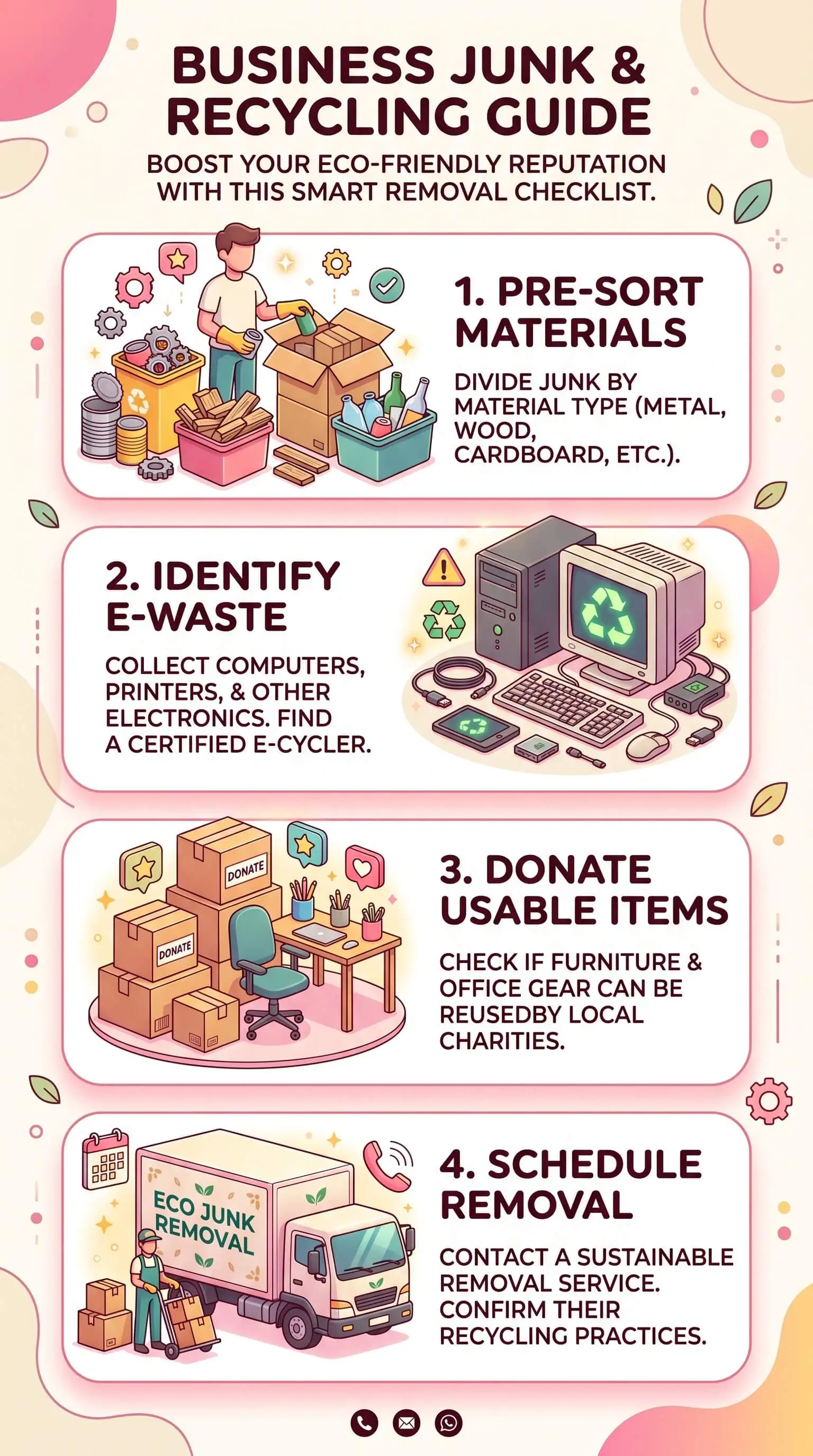
A greener cleanout is really about decision order, not extra labor. Make a handful of calls in the right sequence and most of the material sorts itself out. Here's that sequence.
Step 1: Audit what you're removing. Walk the space before anything moves. Note what you've got by category: furniture, electronics, paper and cardboard, metal, appliances, and anything that looks hazardous. That quick inventory tells you what can be diverted and how much volume you're dealing with, which also gets you a more accurate quote.
Step 2: Sort by material and recyclability. Group items into clear streams: cardboard and paper, metal, plastics, wood, and glass. Most have solid recycling markets, and keeping them out of the general trash pile is the one thing that most affects how much actually gets recycled.
Step 3: Separate hazardous waste and electronics. Batteries, fluorescent tubes, paint, solvents, and old electronics can't go in a general dumpster, and in plenty of places dumping them there breaks the law. Pull these out early. Electronics in particular hold metals worth recovering, so they go to a certified recycler.
Step 4: Route donations and resale items. Working furniture, fixtures, and equipment often have years left in them. Desks, chairs, shelving, and appliances in decent shape can go to a reuse organization, often with free pickup. Donating also leaves a paper trail and can earn a tax deduction.
Step 5: Choose a hauler that actually recycles. Plenty of junk removal companies don't, so ask before you book. A good one will tell you where the materials go, roughly how much gets diverted, and whether you'll get weight tickets or recycling receipts. This is where professional commercial junk removal earns its keep. The right partner handles the sorting, the hauling, and the paperwork so your team doesn't have to.
Step 6: Document your diversion. Get the weight tickets and the recycling or donation receipts. Those records back up compliance, feed your sustainability or ESG reporting, and hand you a real number the next time someone asks how much you kept out of the landfill.
The short version, in order:
Audit what you're removing.
Sort by material and recyclability.
Separate hazardous waste and electronics.
Route donations and resale items.
Choose a hauler that genuinely recycles.
Document your diversion.
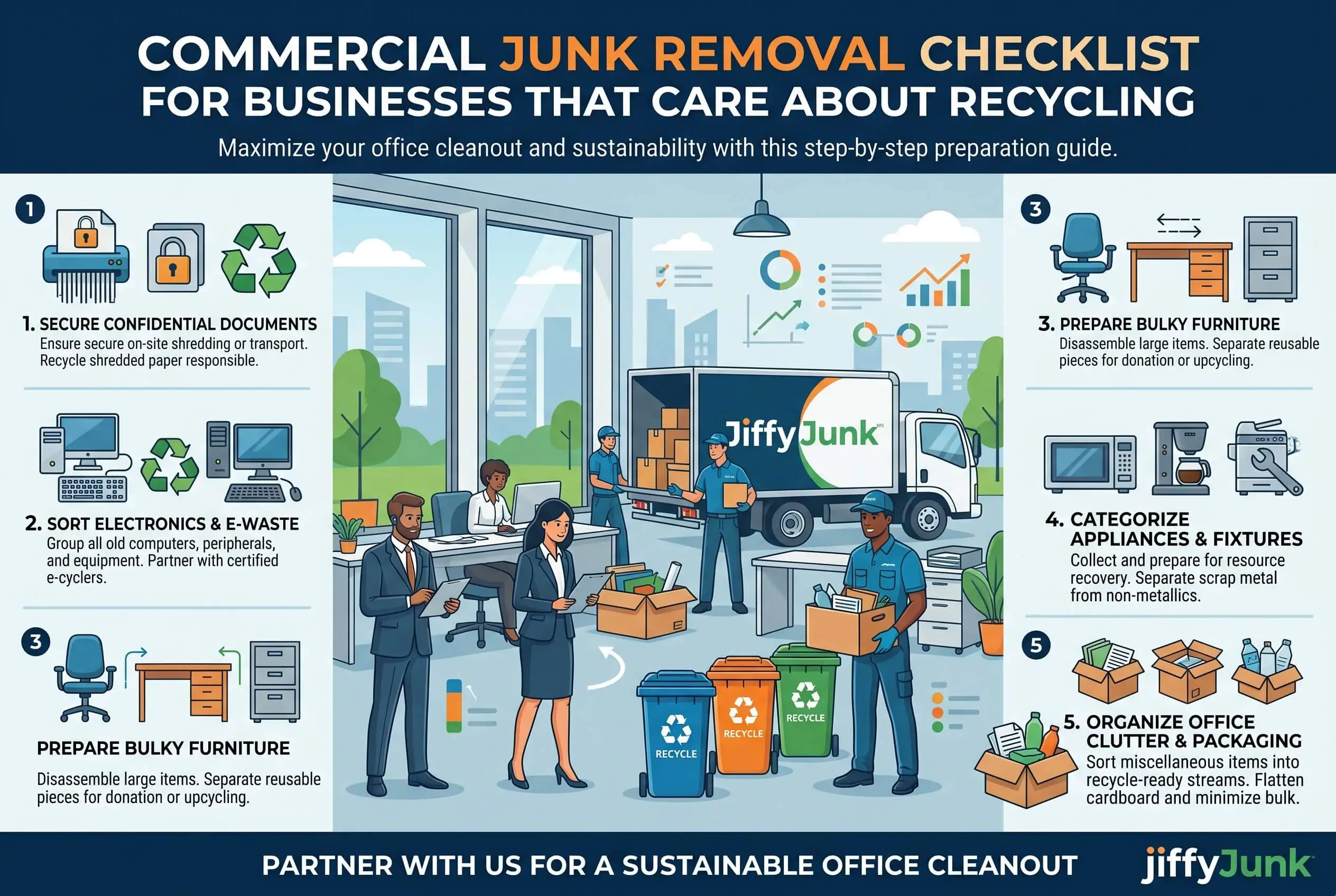
“The difference between a cleanout that recycles and one that doesn't comes down to one choice, made before anyone lifts a box. Map the material streams at the walkthrough and you'll divert most of a commercial load. Let it all get mixed in the truck first, and almost none of it gets recovered, because pulling it apart after the fact costs more than it's worth. Recycling is a sequencing decision, not a sorting chore.”
7 Essential Resources
References worth keeping on hand when you plan a recycling-first cleanout:
EPA: Managing and Reducing Wastes, A Guide for Commercial Buildings. Tools for setting up waste reduction and recycling in office and commercial spaces.
EPA: Sustainable Management of Construction and Demolition Materials. How to divert renovation and demolition debris.
EPA: Electronics Donation and Recycling. Where and how to recycle or donate old devices responsibly.
EPA: Managing Your Hazardous Waste, A Guide for Small Businesses. Identifying and handling hazardous materials the right way.
Earth911 Recycling Locator. Find drop-off options by material and ZIP code.
Call2Recycle (The Battery Network). Locate drop-off sites for batteries and cell phones.
Habitat for Humanity ReStore: Donate Goods. Donate furniture and fixtures, with pickup and corporate programs available.
3 Statistics
The U.S. generated 292.4 million tons of municipal solid waste in 2018, and roughly half of it, about 146 million tons, went to landfills. (U.S. EPA)
The U.S. produced an estimated 600 million tons of construction and demolition debris in 2018, more than double the municipal solid waste from the same year. (U.S. EPA)
The world threw out 62 million tonnes of electronic waste in 2022, and only 22.3 percent was formally collected and recycled. (Global E-waste Monitor 2024)
Final Thoughts
A recycling-first cleanout hauls for less, leaves you with records you can actually report against, and gives you a sustainability number that holds up when someone wants proof. None of that takes special equipment or extra hours. It takes one early decision: that recyclable and reusable material gets handled separately.
If anything sticks, let it be this. Recycling during a business cleanout is won or lost at the walkthrough, not at the dumpster, just as rеgulаr сlеаnіng of уоur dryer vеnt is easier when it’s planned before problems build up. Sort the plan before you sort the stuff, pick a hauler who can show you where your materials land, and the rest mostly takes care of itself.
Frequently Asked Questions
What is commercial junk removal?
Commercial junk removal collects, hauls, and disposes of business waste, from office furniture and electronics to renovation debris. The greener providers sort the load so recyclable, donatable, and hazardous items reach the right destination instead of the landfill.
How is commercial junk removal different from residential junk removal?
Commercial jobs usually run larger, on tighter schedules, with building-access rules and material types like bulk electronics or fixtures. They also tend to need documentation for compliance or sustainability reporting.
What can actually be recycled during a business cleanout?
Cardboard, paper, metal, many plastics, wood, glass, and electronics all have recycling paths. Furniture and working equipment often do better as donations or resale than as recycling.
How much do commercial junk removal services cost?
Price usually tracks volume, material type, labor, and disposal or recycling fees. An accurate quote starts with knowing how much you have and what's in it, which is exactly why the audit comes first.
How do I dispose of old office furniture and electronics responsibly?
Send working furniture to a reuse organization, and route electronics to a certified recycler rather than the trash. Many haulers and donation centers will pick up large items for free.
Plan a Cleaner Cleanout
Start with the audit. Line up a same-day junk removal hauler that documents where your materials go. Do those two things and a routine haul turns into a measurable win for your budget and your sustainability goals.