Set the thermostat to heat on a January morning in a house that's never had central air, and an electric furnace kicks on like it would anywhere else. Everything it needs to warm your home sits inside one metal cabinet.
So what is an electric furnace? It's a central heater that warms air over electric heating elements, then uses its own built-in blower to push that air through your ducts. In this pairing, central air is the add-on. An AC system brings a cooling coil and an outdoor unit, and it borrows the furnace blower to move cold air through the same ducts.
That's why heat-only setups are so common in mild climates and in older homes that never got cooling.
TL;DR Quick Answers
what is an electric furnace
An electric furnace is a central heater that warms air over electric heating elements, then pushes it through your ducts with a built-in blower. It burns no fuel, so there’s no flame or flue. Most homeowners never see the limit switch inside, which shuts the furnace down when a clogged filter chokes airflow.
How it heats: Three to seven staged elements, each typically rated around 5 kW, according to the U.S. Department of Energy.
What moves the air: A blower inside the cabinet, which central AC shares when you have it.
Efficiency: Nearly all the electricity it draws becomes heat, though your running cost follows your electric rate.
Best fit: Mild-winter areas, or homes with ducts but no gas line.
Easy win: A monthly filter check keeps the limit switch from tripping.
Top Takeaways
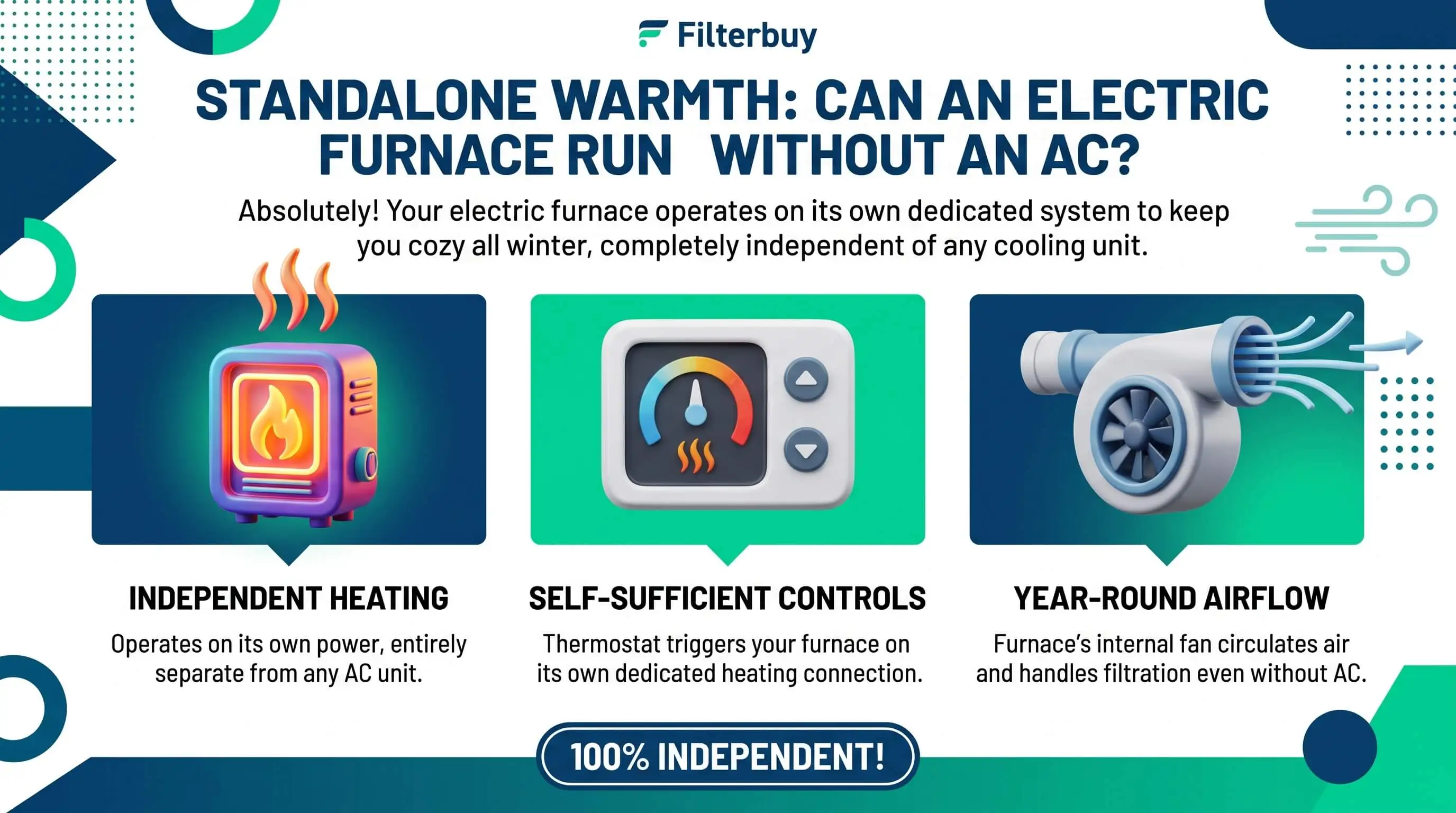
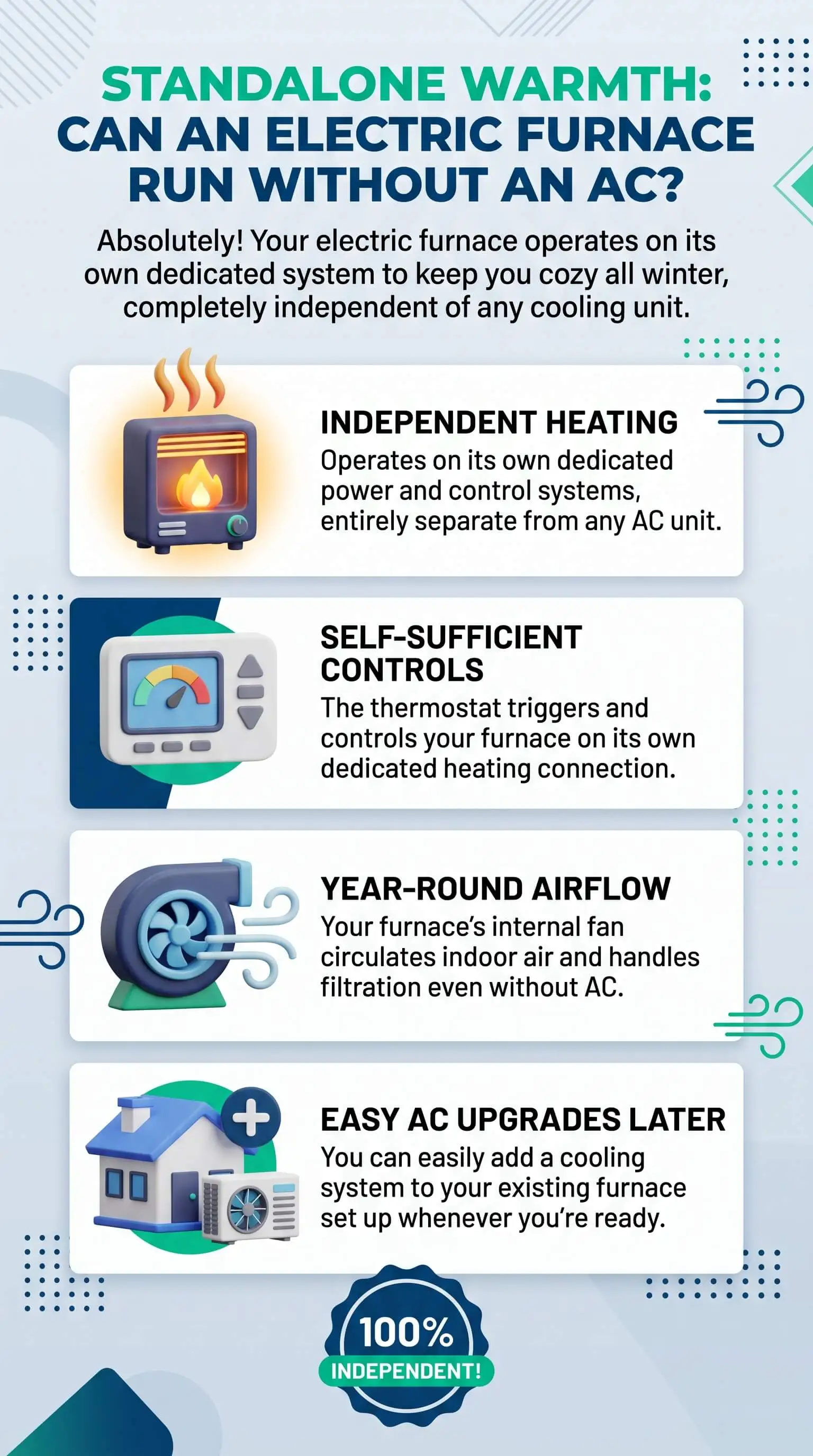
An electric furnace heats on its own because its blower lives inside the cabinet.
Central air adds a cooling coil and an outdoor unit, and it borrows the furnace blower to move cold air.
A heat-only setup needs a dedicated 240-volt circuit, sound ducts, a matching thermostat, and the right air filter.
A heat pump can cut electric heating use by about half, so it's worth pricing if your winters get cold.
To keep cooling on the table, save plenum space for a coil and confirm your blower can handle the extra airflow.
What Is an Electric Furnace?
Behind the front panel, you'll find the heating elements, the blower, and the controls that tell both when to run. According to the U.S. Department of Energy, most units hold three to seven elements, each typically rated around five kilowatts. They switch on in stages, so your electrical system never takes the whole load at once.
Most homeowners never think about the safety switch tucked in there. The DOE calls it a limit controller, and it shuts the furnace down when the cabinet runs too hot. That usually happens when the blower fails or a clogged filter starves the system of air. For the full tour of parts and the heating cycle, here's a clear guide to how an electric furnace heats your home.
How an Electric Furnace Works on Its Own
Your thermostat calls for heat.
The sequencer brings the heating elements online one stage at a time.
After a short pause, the blower starts and pulls room air through the return filter.
That air moves across the hot elements and out through the supply ducts to every room.
Once the room hits your set temperature, the elements shut off, and the blower keeps running a little longer to push out the leftover heat.
Look closely at that sequence and you won't find a refrigerant line or an outdoor unit anywhere in it. The whole heating path lives inside the furnace cabinet.
What Changes When a Home Has No Air Conditioner
In a house with central air, a cooling coil sits on top of or beside the furnace, and a condenser hums away outside. Manufacturers built forced-air systems with that pairing in mind. This overview of central heating furnaces explains that installers add central cooling by placing a coil at the furnace outlet.
Take the AC away, and that coil and outdoor unit simply aren't there. Your thermostat runs in heat-only mode. On mild days, you can still switch the fan on by itself to keep air moving through the house.
Equipment You Need for Standalone Electric Heat
The furnace cabinet. Heating elements, blower, and controls, all in one unit.
A dedicated 240-volt circuit. A licensed electrician should size it to the furnace nameplate.
Ductwork in good shape. Leaky supply and return ducts in an attic or crawl space give away heat before it ever reaches your rooms.
A thermostat set for electric heat. Many thermostats offer a gas or electric option, and the electric setting handles fan timing for this kind of system.
The right return air filter. Get the exact size, and point the airflow arrow toward the blower.
Room to work. Keep the space in front of the cabinet clear so a technician can get the panel off.
Electric Furnace, Air Handler With Heat Strips, or Heat Pump?
People mix these three up constantly, and I get why. Tucked into a hallway closet, they can look nearly the same. An electric furnace only heats. An air handler with heat strips usually pairs with a heat pump or an air conditioner, and its strips kick in as backup heat. A heat pump moves heat instead of making it, so the same equipment handles both heating and cooling.
The Department of Energy says that if electricity is your only option, a heat pump can cut electricity use by about half compared with resistance heat. That still doesn't rule out an electric furnace. In places with only a handful of heating days, the DOE notes, resistance heat may not cost enough to matter.
Planning to Add Air Conditioning Later
If cooling's on your wish list, a couple of choices you make now will save money later. Leave room in the supply plenum for a future coil, and ask whether your blower can deliver the extra airflow that cooling demands. Then have a contractor run a Manual J load calculation. It tells you what size equipment your house actually needs for summer and winter.
Electric Heat, Your Dryer, and Panel Capacity
Your electric furnace and your electric clothes dryer have more in common than most people realize. Both run on 240-volt circuits from the same panel, and both rank among the biggest power draws in the house. In winter, they often run at the same time.
That's one more reason to keep your dryer vent clear. A clogged vent stretches every drying cycle, which keeps a heavy load on your panel longer and raises the risk of a fire. If your dryer isn't heating like it used to, check the vent first.
Keeping a Heat-Only System Running Smoothly
When an electric furnace shuts itself off, poor airflow is the usual cause. The good news is that this is the part you control, and it doesn't take long. Check the return filter every month and swap it every one to three months. Keep furniture and rugs off the return grilles. And have a pro look over the elements and wiring connections on a regular schedule. If you've never changed one before, this walkthrough on changing a furnace filter covers the basics.
"Over years of servicing heat-only systems, I've rarely seen an electric furnace quit because there's no air conditioner attached. What I see far more often is a filter left in so long that low airflow trips the limit switch, and a family that thinks the furnace is broken when a fresh filter and clear returns would have it running again in minutes."
Essential Resources
What Is an Electric Furnace and How It Works. A plain-language guide to the parts, heating cycle, and care of an electric furnace.
U.S. Department of Energy: Electric Resistance Heating. How electric furnaces stage their elements, and how their running costs stack up against heat pumps.
ACCA: Manual J Standard Review. Why contractors rely on this standard to size home heating and cooling equipment.
Building America Solution Center: Manual J Residential Load Calculation. A national lab's summary of where Manual J applies and why it matters.
EPA: Air Cleaners and Air Filters in the Home. What a furnace or HVAC filter can and can't do for the air in your home.
U.S. Fire Administration: Clothes Dryer Fire Safety. A one-page checklist for lint filters, vents, and safe dryer habits.
City of Melbourne Fire Department: Preventing Clothes Dryer Fires. Installation and upkeep tips from a Florida fire department, including yearly vent cleaning.
Understanding how electric furnaces work, choosing properly sized heating equipment, and maintaining clean airflow are essential for efficient home heating. Resources from the DOE, EPA, and HVAC industry experts highlight the importance of proper system sizing, regular maintenance, and selecting MERV 8 pleated furnace air filters to capture common household particles while supporting adequate airflow.
Supporting Statistics
In 2020, space heating and air conditioning took up 52% of a typical U.S. household's yearly energy use, according to the U.S. Energy Information Administration.
Air-source heat pumps can deliver roughly three times as much heat as the electricity they use, since they move heat rather than create it, according to ENERGY STAR.
Electrical failures or malfunctions cause about 47,700 U.S. home fires every year, based on NFPA data shared by the Electrical Safety Foundation International.
Final Thoughts
Plenty of homeowners assume a furnace without AC is only half a system, and I think that sells it short. An electric furnace heats your home completely on its own. I'd lean toward one in a mild-winter area, or in a home that has ducts but no gas line.
Where winters run long and cold, I'd price a heat pump before you commit, because that operating cost gap grows every month the heat runs. Whichever way you go, comfort comes down to right-sized equipment, sealed ducts, a clean filter, and a panel with room to spare.
Frequently Asked Questions
Do I need an air conditioner for my furnace blower to work?
No. The blower belongs to the furnace. When you have central air, the air conditioner uses that same blower to move cooled air.
What is an electric furnace?
It's a central heater that warms air with staged electric heating elements and uses a blower to send that air through your ductwork.
Can I add central air to an electric furnace later?
Usually, yes. A contractor adds a cooling coil at the furnace outlet and an outdoor condenser, then checks that the blower can handle cooling airflow.
Is an electric furnace expensive to run?
It turns nearly all the electricity it uses into heat, but your running cost depends on your electric rate and your climate. In colder regions, a heat pump usually costs less to operate.
Does a heat-only furnace still need a filter?
Yes. The filter protects the blower and elements, and a clogged one is the most common reason the limit switch shuts the furnace down.
Heat Your Home With Confidence, With or Without Cooling
Your electric furnace can carry your home through winter on its own when the circuit, ducts, and filter are ready to support it. Start with a quick look at your breaker panel and filter size, then ask a licensed pro whether cooling belongs in your plans. If your system is aging or struggling to heat your home efficiently, a furnace replacement may also be worth considering.